Source Rubber Light Up Basketball for Racing, Entertainment, and Team Sports
Find 30 rubber light up basketball options for outdoor play, entertainment, and team sports. Compare models like SGB042 and XY-RB-001, noting materials such as PVC and PU, size standards, and customization features for diverse buyer needs; compare the available evidence and request quotations based on your requirements.
Key considerations
Products List


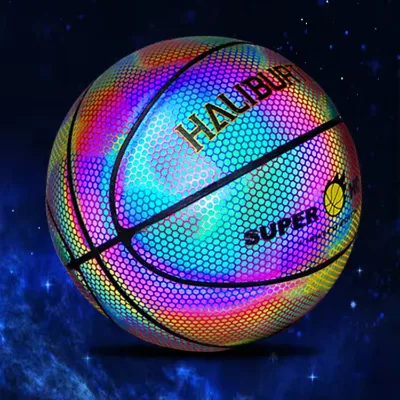


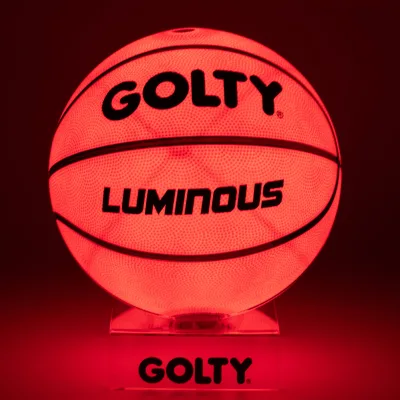


Comprehensive Sourcing Guide
Rubber Light Up Basketball Sourcing Guide
Procuring rubber light-up basketballs requires distinguishing between general sports equipment and specialized entertainment items, as the supplied data indicates a split between standard outdoor usage and specific racing or entertainment applications. Buyers must verify if the "rubber" material attribute refers to the core construction or a specific surface finish, given that other listings in the same category utilize PVC, PU, or super fine strong fiber. This distinction is critical because the light-up functionality often dictates the internal component integration, which may vary significantly between a standard size 7 ball for team sports and a smaller size 2 unit designed for children's entertainment.
The observed product range includes models with and without logo printing, suggesting that customization is a primary driver for this category rather than a uniform feature. While some entries explicitly state "Customized" and "OEM or ODM" capabilities, others list "Without Logo Printing," indicating a need to clarify branding requirements before finalizing orders. Sourcing strategies should account for the fact that the "rubber" designation might be a generic descriptor for the material feel, while the actual composition could involve synthetic blends or specific fiber types depending on the manufacturer's specific model number, such as the SGB or XY-RB series.
Product Scope and Observed Listing Signals
The market signals reveal a diverse inventory spanning multiple age groups, from children to adults, which necessitates careful selection based on the intended end-user demographic. Listings explicitly mention "Children" and "Adults" as distinct target audiences, implying that the physical dimensions and durability requirements will differ substantially between a size 2 ball for younger users and a size 7 ball for professional or adult recreational play. Buyers should scrutinize the "Basketball Usage" attribute, noting that some products are designated for "Outdoor" use while others are marked for "Both" indoor and outdoor environments, a factor that directly impacts the material's resistance to weather and surface abrasion.
Commercial signals indicate a wide variance in minimum order quantities, ranging from small batches of 2 units to large industrial orders of 1000 units, with specific models like the XY-RB series showing a standard MOQ of 500 pieces. This disparity suggests that suppliers operate on different scales, with some capable of handling high-volume capacity of 300,000 pieces while others cater to smaller, customized orders. The presence of "In Stock" items alongside custom manufacturing options means buyers must determine their urgency and volume needs early to avoid delays, as the lead time for customized rubber light-up units may differ significantly from ready-to-ship standard inventory.
Technical Specifications to Verify
Technical verification must begin with the material composition, as the data shows a mix of PVC, PU, leather, and super fine strong fiber alongside the requested rubber attribute. Buyers should confirm that the "rubber" claim aligns with the actual material specification, ensuring the surface texture and elasticity meet the performance standards for the intended usage, whether it is racing, entertainment, or team sports. The "Method" attribute lists "Rubber," but this should be cross-referenced with the physical material to ensure the light-up mechanism is securely embedded within a durable rubber shell rather than a fragile synthetic alternative that might degrade under high-impact play.
Dimensional and model specifications are equally critical, with observed standards ranging from size 2 to size 7 and specific dimensions like 25x25x25cm for certain accessories. The product models, such as SGB042, XY-RB-001, and C001B, represent distinct configurations that may vary in weight, bounce, and internal lighting technology. Procurement teams must verify that the selected model number corresponds to the correct size standard for the target age group, ensuring that a ball intended for children is not accidentally sourced as an adult-sized unit, which could lead to safety issues or product rejection by the end consumer.
Compliance and Safety Documentation
Safety compliance is paramount for products targeting children, and the data explicitly references the EN71 6p testing standard, which is a crucial benchmark for toy safety in many international markets. Buyers must request current test reports confirming that the rubber light-up basketballs meet these specific chemical and mechanical safety requirements, particularly regarding small parts and battery safety if the light-up feature is battery-operated. The "Friendly -Envirent Material" attribute suggests an environmental consideration, but this should be validated through third-party documentation to ensure the materials used do not contain hazardous substances that would violate import regulations in the destination country.
Documentation regarding the product's origin and manufacturing standards is also essential for risk mitigation, with observed origins including China and Ningbo. While the data lists "High Quality" as a general attribute, this is an observation rather than a certified guarantee, so buyers should insist on quality control certificates that verify the durability and safety of the final product. The "Condition" is listed as "New," but this does not preclude the need for pre-shipment inspections to ensure that the light-up components function correctly and that the packaging, often described as polybag or master carton, protects the product from damage during transit.
Cost Drivers and Commercial Terms
Cost structures in this category are heavily influenced by the level of customization, with "OEM or ODM" design options typically commanding higher unit prices than standard off-the-shelf models. The presence of logo printing services, available in both "With" and "Without" variants, adds a variable cost layer that must be factored into the total landed cost, especially for bulk orders where branding is a key differentiator. Buyers should anticipate that the "MOQ" of 500 pieces for certain models may be a threshold for accessing the most competitive pricing tiers, while smaller orders might incur significant per-unit premiums due to setup and tooling costs.
Commercial terms must also account for the diverse packaging requirements observed, ranging from individual polybags to master cartons, which affect shipping volume and freight costs. The "Capacity" of 300,000 pieces indicates that large suppliers can absorb volume fluctuations, but buyers should negotiate clear terms regarding lead times and production scheduling to avoid bottlenecks. Additionally, the price range of 1-50 USD suggests a wide spectrum of quality and feature sets, requiring buyers to align their budget with the specific technical specifications and material quality required for their specific market segment.
Supplier Qualification and Quality Control
Supplier qualification should focus on verifying the "Capacity" and "Source Category" to ensure the vendor can consistently meet demand without compromising on the "High Quality" standards observed in the listings. Buyers must assess whether the supplier has the infrastructure to handle the specific "Method" of rubber construction and the integration of light-up components, as this requires specialized manufacturing expertise beyond standard ball production. The "Design" attribute of OEM or ODM implies a need for a supplier with strong R&D capabilities to support customizations, which should be validated through a review of their past projects and client references.
Quality control protocols must be rigorous, given the mix of materials and the potential for mechanical failure in light-up mechanisms. Inspections should verify that the "Durable" claim holds true under repeated impact and that the "Basketball Usage" specifications are met for both indoor and outdoor conditions. Buyers should implement a pre-shipment inspection plan that specifically tests the lighting functionality, battery longevity, and structural integrity of the rubber shell, ensuring that the final product matches the "New" condition and "High Quality" expectations set forth in the initial product descriptions.
Long-Term Procurement Checks
Long-term procurement success depends on establishing a robust relationship with suppliers who can maintain consistency in the "prod_standard" and material composition over multiple production cycles. Buyers should monitor the "prod_model" variations to ensure that any changes in design or material, such as switching from PVC to PU or altering the fiber type, do not negatively impact the product's performance or safety profile. Regular audits of the supplier's quality control processes are necessary to confirm that the "EN71 6p" compliance and other safety standards are consistently met, preventing costly recalls or reputational damage in the marketplace.
Sustainability and environmental compliance should be a recurring check, particularly given the "Friendly -Envirent Material" attribute observed in some listings. Buyers must verify that the environmental claims are backed by valid certifications and that the supplier adheres to evolving regulations regarding plastic and rubber waste. Additionally, tracking the "prod_packing" methods over time ensures that the packaging remains effective in protecting the product while minimizing waste, aligning with broader corporate sustainability goals and reducing the overall environmental footprint of the procurement operation.
FAQs
What materials are used for rubber light up basketballs?
These balls are typically constructed from durable PVC or PU leather to ensure longevity during outdoor play. Some models utilize super fine strong fiber for enhanced texture. The core often incorporates rubber methods for bounce consistency. All listed materials are certified as environmentally friendly, ensuring safety for children and adults during recreational use.
Can I customize the logo on these basketballs?
Yes, customization is available for most models. Buyers can choose between logo printing or no logo printing options. The design supports both OEM and ODM services to meet specific branding needs. This flexibility allows businesses to create unique products for team sports or entertainment purposes while maintaining high quality standards.
What sizes are available for these basketballs?
Standard sizes range from size 2 to size 7, catering to different age groups. Specific models are designated for children, while others are suitable for adults. Some products are available in size 2 or size 7 specifically. This variety ensures that buyers can select the appropriate ball for youth training, recreational games, or professional team sports applications.
What is the typical MOQ for these products?
The minimum order quantity varies by supplier and product model. Observed MOQs range from 2 to 1000 pieces. Some specific models require a minimum of 500 pieces. Buyers should check individual product listings for exact requirements. This flexibility allows small businesses to test markets while larger enterprises can secure bulk inventory for distribution.
Are these basketballs suitable for outdoor use?
Yes, many models are explicitly designed for outdoor basketball usage. They feature durable materials like PVC and PU to withstand rough surfaces. Some products are also suitable for both indoor and outdoor environments. The construction ensures consistent performance in various conditions, making them ideal for recreational entertainment and team sports activities in diverse settings.
What certifications do these basketballs meet?
Products are tested against safety standards such as EN71 6p. This certification ensures the materials are safe for children and general use. The use of environmentally friendly materials further supports compliance with international safety regulations. Buyers can rely on these standards for quality assurance, ensuring the products are safe for distribution in global markets.